
How Advanced Vehicle Safety Technology Helps Seniors Conquer Night Driving Challenges
Fatal night crashes occur at three times daytime rates, but driver assistance systems reduce glare by up to 60 percent to preserve senior mobility.
 Watch the broadcast
Does driving after sunset cause you more anxiety and eye strain than it used to? As late autumn brings earlier darkness during evening commutes, millions of older motorists notice that headlights from oncoming traffic appear blindingly bright and dark intersections become harder to read. According to data from the National Highway Traffic Safety Administration, fatal traffic accidents occur at three times the daytime rate after nightfall.
Despite driving fewer miles after dusk, mature Americans face real optical and environmental obstacles when the sun goes down. However, recent engineering and clinical findings show that emerging vehicle technologies—including adaptive headlights, lane alerts, and blind-spot monitors—are systematically dismantling the risks associated with night driving, giving older motorists the confidence and tools they need to stay safe and mobile.
Night Driving by the Numbers: Glare, Darkness, and Crash Risk
The difficulties associated with night driving stem from normal physiological changes in the human eye. Vision specialists and automotive safety researchers point out that as people age, the physical structure of the eye alters how ambient illumination reaches the retina. By age 60, human retinas receive only one-third of the ambient light they did at age 20. This natural reduction in light transmission impairs contrast perception, making dark asphalt, pedestrians in dark clothing, and unlit roadway borders much harder to distinguish.
Compounding this loss of light sensitivity is corneal light scatter, which causes severe headlight sensitivity. When bright high beams or modern lamps hit an aging cornea, the light disperses rather than focusing cleanly on the retina. Research indicates that drivers over age 65 take eight times longer to recover from high-beam glare than drivers in their 20s. A younger driver might blink and regain clear road vision almost instantly, whereas a senior motorist may drive blind for critical seconds while their eyes re-adapt to surrounding darkness.
Source: National Highway Traffic Safety Administration (NHTSA)
View as table
| Glare Recovery Time | |
|---|---|
| Drivers in 20s | 1Multiplier |
| Drivers 65 and Older | 8Multiplier |
These visual hurdles directly correlate with crash statistics. The National Highway Traffic Safety Administration notes that the risk of a fatal accident triples per mile traveled at night compared to daytime. Because of delayed glare adaptation and lowered night vision, many senior drivers choose to severely limit their evening travel. This voluntary driving restriction often leads to missed family dinners, skipped evening community events, and difficulty attending medical appointments scheduled after twilight.
How Driver Assistance Systems Restore Nighttime Visibility
Fortunately, modern vehicles are equipped with Advanced Driver Assistance Systems (ADAS) designed to bridge the gap between age-related vision changes and nighttime driving hazards. Rather than relying solely on human vision in difficult visual conditions, these systems use forward-facing sensors, cameras, and radar to monitor the roadway continuously.
Three core vehicular systems offer direct safety advantages for older drivers:
- Adaptive Driving Beams (ADB) and High-Beam Assist: Traditional high beams force drivers to choose between blinding oncoming traffic and driving with inadequate forward visibility. Adaptive driving beams solve this problem dynamically. These smart systems detect approaching vehicles and automatically shade out portions of the light beam directed at other motorists while keeping the rest of the highway, shoulders, and road signs brightly illuminated. Independent evaluations demonstrate that adaptive headlights produce up to a 60 percent reduction in oncoming glare while automatically lighting up dark curves ahead.
- Radar-Based Blind Spot Monitoring: Checking blind spots requires neck flexibility and swift peripheral processing—two things that can be challenged in pitch darkness. Radar-based blind-spot warning systems identify adjacent vehicles with greater than 90 percent accuracy. In controlled testing by the AAA Foundation for Traffic Safety, blind-spot systems successfully alerted drivers to approaching vehicles in 92 percent of merge scenarios during low-light conditions, drastically minimizing side-impact collisions.
- Lane Departure Alerts and Automatic Dimming Mirrors: Lane departure warning systems track road markings and gently alert drivers if their vehicle begins drifting across lane lines on poorly lit highways. Complementing these warnings, automatic dimming rear-view and side mirrors neutralize the intense reflections caused by trailing headlights, reducing interior glare and driver eye fatigue.
Comparing In-Vehicle Night Safety Technologies
To understand how each driver assistance feature addresses specific age-related physical factors, automotive researchers have mapped clinical benchmarks directly to vehicle aids.
| Night Safety Factor | Research Metric (2026) | Safety Benefit for Older Drivers |
|---|---|---|
| Glare Recovery Time | 8x longer for ages 65+ vs. 20s | Explains delayed road reaction to oncoming high beams; highlights need for automated beam shaping |
| Adaptive Headlight Output | 60% reduction in oncoming glare | Shapes light beam around approaching vehicles, reducing corneal light scatter |
| Blind Spot Detection Accuracy | 90%+ vehicle radar identification (92% in merge tests) | Alerts drivers to vehicles hidden in pitch darkness during critical lane merges |
| Retinal Illumination Intake | One-third ambient light at age 60 vs. age 20 | High-beam assist and active curve lighting compensate for reduced night contrast |
Global Perspectives: Adaptive Lighting Standards in Germany
The transition toward advanced automotive lighting is progressing across the globe, with distinct approaches between North America and Europe. In Germany, vehicle safety standards overseen by the Federal Motor Transport Authority (Kraftfahrt-Bundesamt or KBA) and guided by the German Road Safety Council (Deutscher Verkehrssicherheitsrat or DVR) have aggressively adopted United Nations Regulation 123.
This international regulatory framework standardizes adaptive front-lighting systems across production passenger vehicles. Under United Nations Regulation 123, European vehicles have widely implemented adaptive matrix LED systems as standard equipment. These systems automatically tailor the beam pattern to vehicle speed, weather, and traffic conditions without requiring manual intervention from the motorist.
As a result of these early and widespread mandates, European drivers over 60 demonstrate lower rates of self-imposed night driving restrictions compared to their American peers. Having headlights that consistently shade oncoming traffic while illuminating curbsides allows senior drivers in Germany to maintain everyday independence well into their later years.
Practical Steps to Prepare Your Vehicle for Night Driving
While advanced driver assistance systems provide an essential layer of digital protection, basic vehicle hygiene and operational knowledge remain vital to maximizing their performance. Even the most sophisticated camera or radar sensor can malfunction if obstructed, and minor habits can dramatically reduce optical distortion.
Checklist for Safer Night Driving
- ☐ Clean interior windshield glass with a microfiber cloth: Interior film, dust, and off-gassing residues create micro-streaks that magnify oncoming headlight halos and double night glare.
- ☐ Wipe down exterior ADAS camera lenses and radar sensors: Remove road grime, mud, and seasonal film from the vehicle's front grille and windshield sensor housings to prevent system blind spots.
- ☐ Verify mirror settings and auto-dimming functions: Ensure side mirrors are correctly angled to minimize light bounce from rear traffic and confirm your vehicle's auto-dimming mirror feature is toggled on.
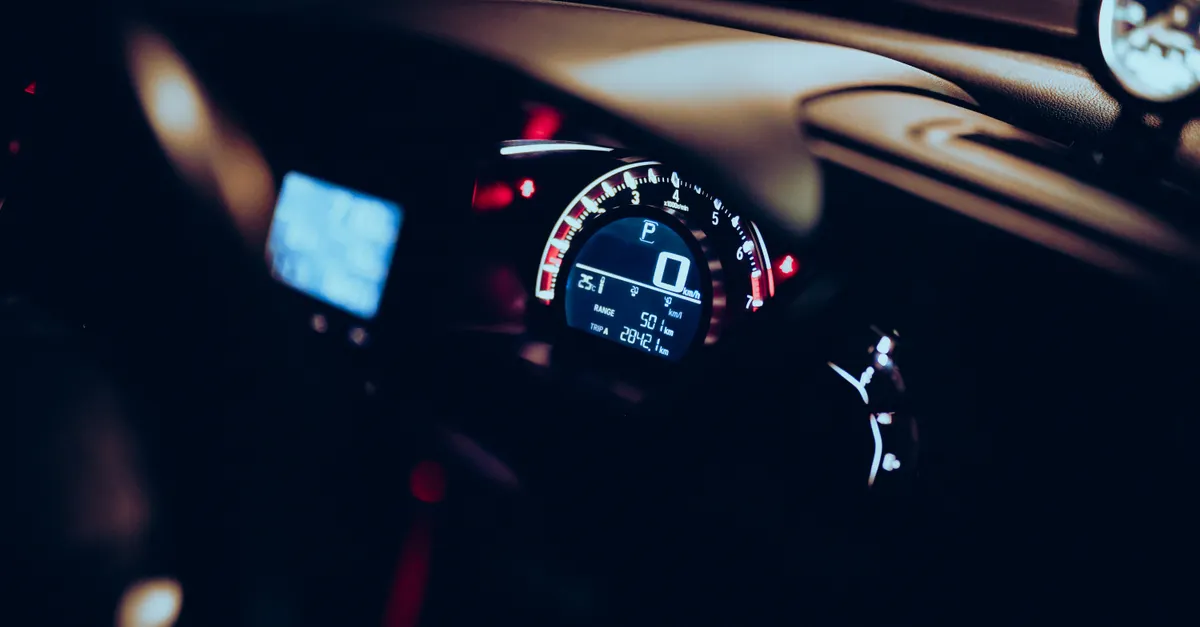
- ☐ Adjust instrument panel lighting: Dim your dashboard backlighting to low or moderate levels so your eyes do not struggle to switch focus between bright cabin displays and the dark exterior highway.
- ☐ Complete a mature driver assessment: Enroll in an online AARP Smart Driver course or a AAA Senior Driving Assessment to customize your vehicle's ADAS settings and learn strategies for night travel.
- ☐ Consult safety resources: If you have questions about specific driver assistance settings, inspect safety tips at nhtsa.gov or phone the National Highway Traffic Safety Administration hotline directly at 1-888-327-4236.
By pairing modern automotive safety features with deliberate maintenance and driver education, mature motorists can bypass the optical hurdles of aging eyes, travel safely after dark, and preserve their independence behind the wheel.
The statistics in this article are based on research published in October and November 2026 by the National Highway Traffic Safety Administration (NHTSA) and the AAA Foundation for Traffic Safety. Drivers should consult their vehicle owner's manual and local licensing authorities for specific driver assistance system operational parameters.
Sources
- Restless Magazine, "7 ways to make driving at night more comfortable" https://restless.co.uk/lifestyle/motoring/7-ways-to-make-driving-at-night-more-comfortable/
- National Highway Traffic Safety Administration (NHTSA), "Older Drivers and Nighttime Crash Mitigation Research" https://www.nhtsa.gov/road-safety/older-drivers
- American Automobile Association (AAA) Foundation for Traffic Safety, "Evaluation of Adaptive Driving Beam Headlights and Night Vision in Mature Motorists" https://aaafoundation.org/research/
- American Automobile Association (AAA), "Senior Driving Safety and Assessments" https://www.aaa.com
More from this edition
Story 3 of 6- Bipartisan Senate Plan Targets 2032 Social Security Solvency and Payroll Tax Caps
- Why Doctors Urge Grandparents to Update Key Vaccines Before Visiting Newborns
- How Advanced Vehicle Safety Technology Helps Seniors Conquer Night Driving Challenges
- Why Two-Thirds of Homeowners Now Support Backyard Cottages for Aging in Place
- Protecting Your Coverage: What Federal Crackdowns on Medicare Fraud Mean for You
- Why Gen Z Is 'Maxxing' Everything and How Grandparents Can Join In
From our sister sites

Recommended for you
This box contains affiliate links. We may earn a commission if you buy through them, at no extra cost to you.
Affiliate product space